A basin defined by its edges
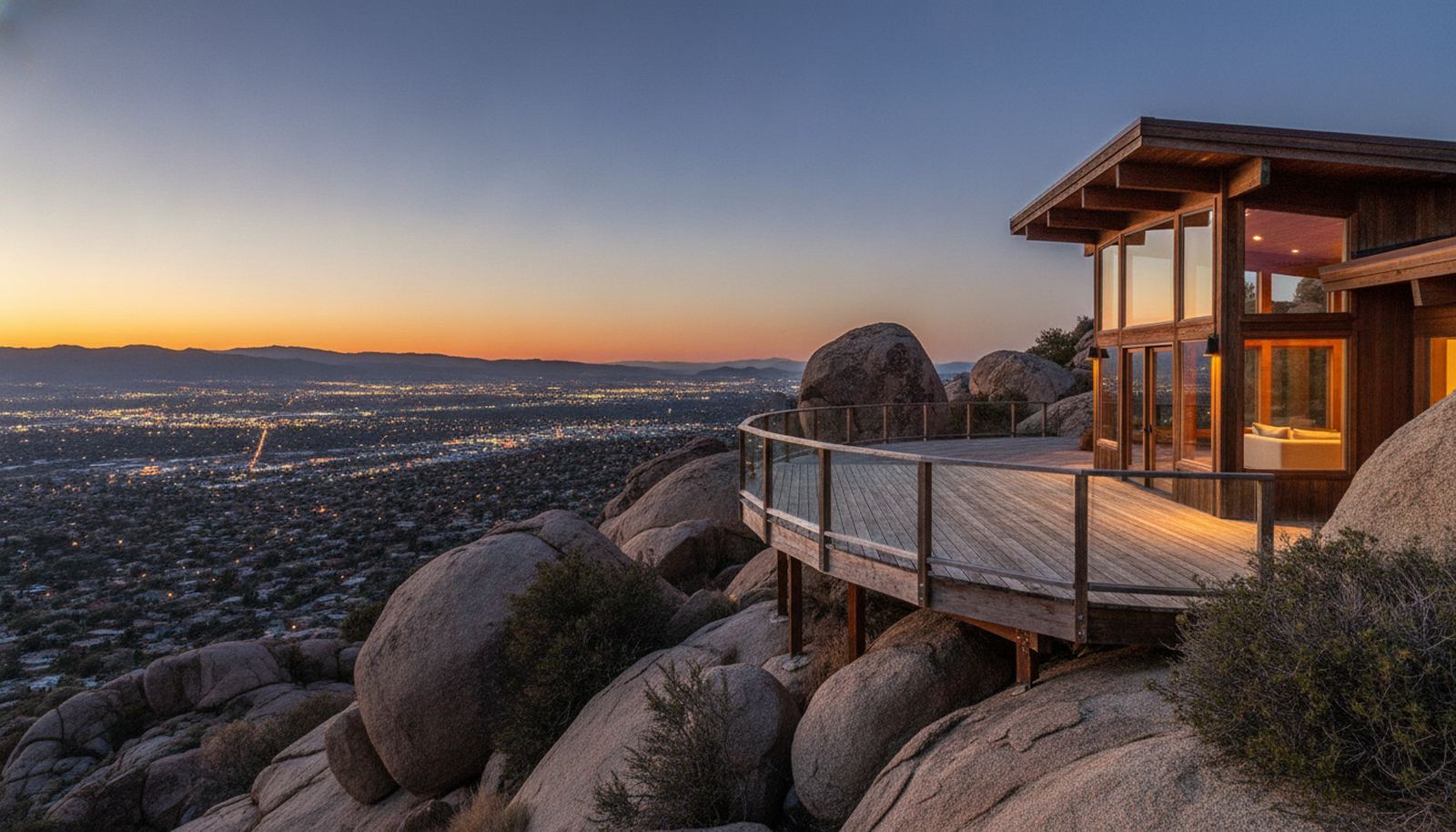
El Cajon's valley floor sits at roughly 433 feet, surrounded by hills that climb several hundred feet higher. Fletcher Hills forms the western ridge, Mount Helix rises to the southwest, and slopes toward Granite Hills, Crest and the eastern foothills close in from the other sides, and the bare dome of El Cajon Mountain marks the distant northeast skyline. Homes on these slopes, whether inside city limits or in neighboring unincorporated areas, often enjoy wide views across the basin, especially at sunrise or when city lights come on at night. They also sit on very different land. Lots may be terraced, steep, irregular or interrupted by granite boulders. Streets follow contours instead of a grid, and driveways can be long or sharply angled. These traits mean hillside property needs its own set of comparables; borrowing sales from flat valley tracts tends to misstate value in one direction or the other.
Valuing the view itself
Not every view is equal, and the appraiser's job is to describe and measure what a buyer would actually experience. A panoramic outlook from a main living area toward Cowles Mountain, the Cuyamaca peaks or the full sweep of the valley is not the same as a glimpse between rooftops from a back bedroom. Orientation, obstruction by neighboring homes or trees and the likelihood of future building all affect the premium. Brian looks for paired sales where similar homes with and without comparable views sold near the same time, which offers the most direct evidence. When such pairs are scarce, he may draw on broader patterns among hillside sales in the same area, explaining the support for any adjustment. The report describes the view in concrete terms, including direction and extent, so readers understand exactly what was valued and can judge the reasoning for themselves.

Slope, rock and site costs
Hillside lots carry costs and limits that valley properties do not. Steep sites may have little flat yard, making pools, play areas or additions difficult or expensive. Large granite outcrops can add character but also restrict usable area and raise excavation costs. Retaining walls, sometimes several tiers, need maintenance and can be costly to repair or replace if they fail. Drainage, erosion control and access during heavy rain are practical concerns. Long, steep driveways may challenge some buyers. The appraiser describes these features, notes any visible distress or deferred maintenance that a buyer would reasonably consider, and selects comparables with similar site conditions where possible. Where a lot's utility is clearly reduced compared with typical sales, that difference is reflected in the analysis. The goal is to show how site characteristics influence what a willing buyer would pay, not to perform an engineering assessment.
Wildfire mapping, insurance and jurisdiction
The outer rim of the Cajon Valley borders chaparral and open slopes, and parts of it fall within mapped fire hazard severity zones, including areas the state has designated as very high. Those designations bring defensible space requirements and building standards for new construction or major remodels, and in recent years they have been associated with tighter insurance availability and rising premiums. Buyers have become more attentive to these issues. The appraiser identifies the designation, notes brush clearance where relevant, and examines whether nearby sales show a measurable effect rather than assuming one. Jurisdiction matters here too. Many rim properties with El Cajon addresses lie in unincorporated areas such as Crest, Granite Hills, Harbison Canyon or Dehesa, where county rules, fire districts and sometimes septic systems or wells apply. Confirming jurisdiction early helps ensure that comparables, permits and site details are all evaluated against the right standards.
This note is general information about appraisal practice, not legal or tax advice.